What Is the Offside Rule in Football?
The offside rule is one of the most debated and misunderstood rules in football. At its core, it exists to prevent players from simply standing next to the goalkeeper and waiting for a long ball — which would ruin the flow of the game.
If you have ever watched a match and heard the referee blow the whistle for “offside” while scratching your head, this article is for you.
The Simple Definition
A player is offside if, at the exact moment a teammate passes the ball to them, they are:
- In the opponent’s half of the pitch, and
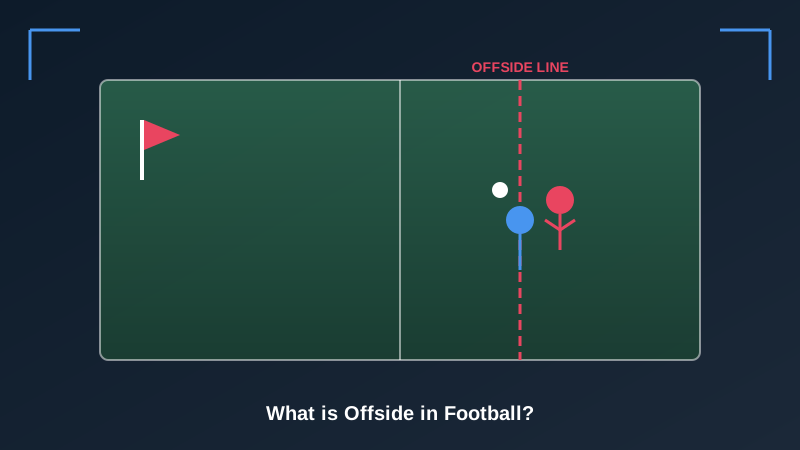
- Closer to the opponent’s goal line than both the ball and the second-to-last defending player (usually the last outfield defender)
The key word is moment. It is not where the player receives the ball that matters — it is where they are when the pass is made.
How It Works in Practice
Imagine this scenario:
- Your team has the ball in midfield
- You are standing near the opponent’s penalty area
- Between you and the goal, there is only the goalkeeper and one defender
- Your teammate plays a forward pass to you
If you were closer to the goal than that second-to-last defender when the ball was kicked, you are offside. The assistant referee (the person with the flag on the sideline) will raise their flag, and play stops.
Now imagine the same situation, but you timed your run so that you were level with or behind the defender when the pass was made — that is perfectly legal, even if you end up in front of the defender by the time you receive the ball.
When Offside Does NOT Apply
There are a few situations where a player cannot be offside:
- Goal kicks — You can stand wherever you want
- Throw-ins — Offside does not apply
- Corner kicks — You can be in an offside position without penalty
- When you are in your own half — The rule only applies in the opponent’s half
Active vs. Passive Offside
Not every offside position results in a whistle. A player is only penalized if they are actively involved in play. This means:
- Receiving the ball
- Interfering with an opponent (blocking their view, challenging for the ball)
- Gaining an advantage from being in that position (e.g., playing a rebound)
If a player is standing in an offside position but does not touch the ball or affect play, the referee should let the game continue. This is called passive offside.
The Role of VAR
Since the introduction of VAR (Video Assistant Referee), offside decisions have become more precise — and more controversial. VAR uses freeze-frame technology to draw lines on the pitch and determine whether a player’s shoulder, head, or any part of the body that can legally play the ball was ahead of the defender.
This has led to goals being ruled out by margins as small as a few centimeters, which many fans find frustrating. Some leagues are now testing thicker lines or a “daylight” offside rule, where a player is only offside if there is clear daylight between them and the defender.
Why the Offside Rule Matters
Without the offside rule, football would look completely different. Attackers could camp near the goal, defenders would have no reason to push up the pitch, and the game would lose its tactical depth. The offside rule creates the cat-and-mouse dynamic between attackers making runs and defenders holding a line — it is one of the things that makes football beautiful.
Common Questions
Can you be offside from a goal kick? No. Goal kicks are exempt from the offside rule.
What happens if a player scores while offside? The goal is disallowed, and play restarts with an indirect free kick for the defending team.
Is it offside if you are level with the last defender? No. Being level with the second-to-last defender is considered onside.
Does offside apply on corners? No. A player cannot be offside directly from a corner kick.